
Key takeaways
- Design and test every supported partition state as a distinct operating condition.
- Separate simple daily controls from the deeper tools used by event technicians.
- Plan audio, video, lighting interfaces, RF and temporary production inputs together.
- Protect revenue with monitoring, recoverable configurations, spares and trained local response.
What makes hotel ballroom AV genuinely flexible?
A flexible ballroom can host a breakfast briefing in one salon, two parallel workshops behind partitions and a gala across the full floor later that evening. The audiovisual system must follow those changes without creating a risky reprogramming exercise between events.
Flexibility therefore means predefined, tested combinations of rooms, stages, sources, microphones, loudspeakers and operator positions—not simply a large switcher with spare ports.
Begin with the hotel's event catalogue and sales promises. List capacities, furniture layouts, stage positions, interpretation needs, recording, streaming, sponsor content and turnaround times for each event type.
An AV integrator in Shanghai for hospitality and event spaces can translate that operating model into signal paths, controls and acceptance tests that suit local buildings, networks and support resources.
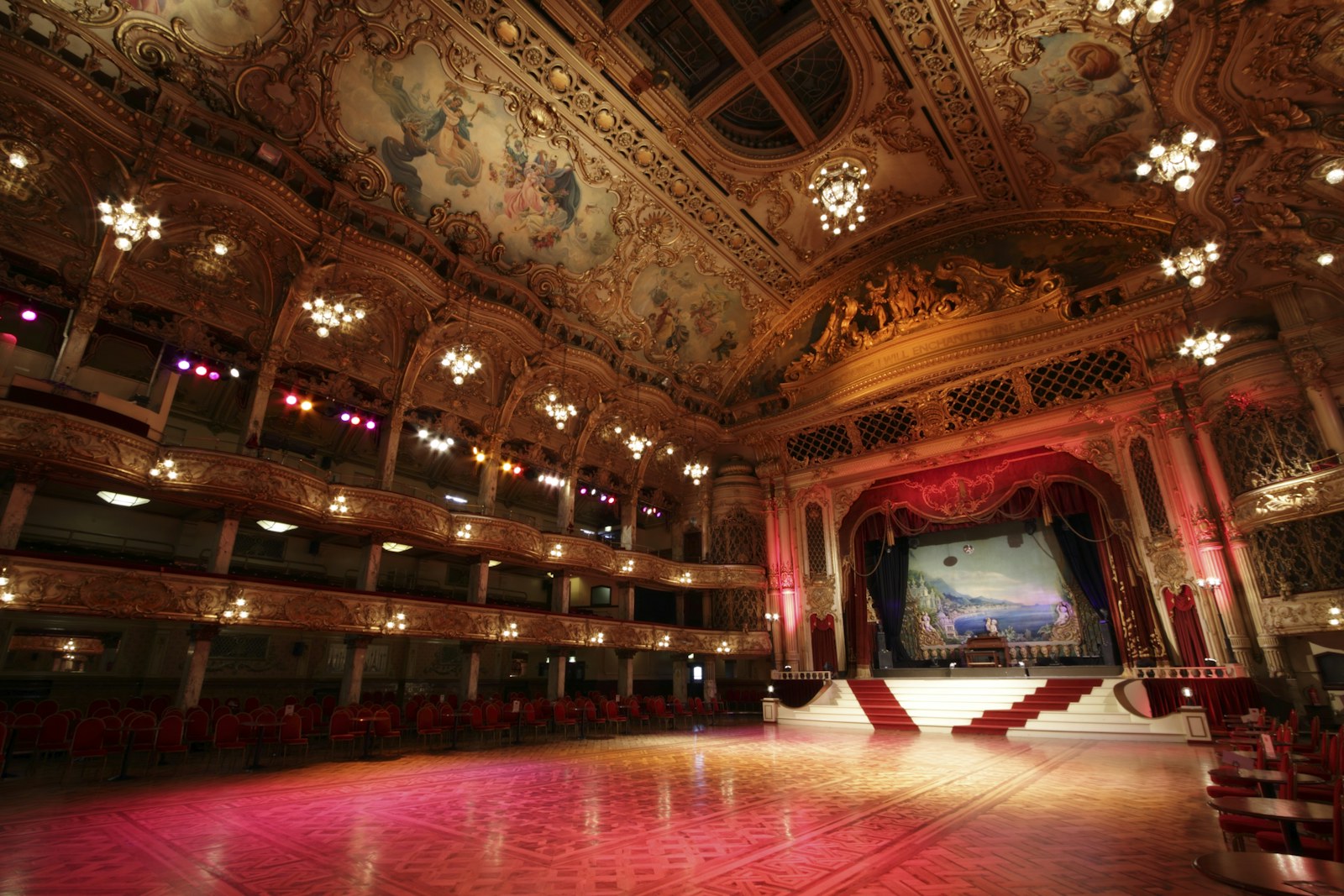
Map every room combination before choosing equipment
Draw the ballroom in every supported state: fully combined, fully divided and each practical partial combination. For every state, mark audience direction, stage or lectern location, technician position, displays, projection surfaces, loudspeaker zones, microphone coverage and guest connection points.
Include pre-function spaces if announcements, overflow content or background music must follow the event.
Each configuration needs a clear audio and video boundary. A presentation in Ballroom A must not appear or be heard in Ballroom B after a partition closes. When rooms combine, the system should intentionally join the correct sources, displays, loudspeakers and controls.
Treat movable walls as operational inputs that require confirmation, not as an assumption made from a floor plan.
Design partitions as a safety-critical state
Partition sensors can inform the control system, but a sensor alone should not trigger an uncontrolled change during a live event. The design must define what happens when a wall moves, a sensor becomes inconsistent or two operator panels request different modes.
Use clear confirmation, interlocks and status feedback so staff know which spaces are joined before routing programme audio or confidential content.
Document a safe transition sequence. Mute or hold affected outputs, verify the intended room state, recall the approved routing and level preset, then let an operator confirm the result. Provide a manual recovery method for trained technicians.
Automatic behaviour is useful only when staff understand it and the system fails predictably.
Build an audio system around zones, not furniture plans
Ballroom audio should remain intelligible across changing layouts. Define loudspeaker zones that follow architectural sections and audience coverage rather than one banquet seating plan. The DSP should recall routing, delay, equalisation and level relationships for each validated combination while preserving sensible limits.
Portable stage monitors or production loudspeakers need deliberate connection points and isolation from the installed speech system.
Acoustic treatment, ceiling height and reverberation determine how much electronic reinforcement can help. Test spoken word at quiet and normal levels from every intended presenter position. A system that becomes loud but indistinct is not ready for a conference.
Sinoway's meeting-room audio and microphone planning guide explains why coverage and acoustics must be designed together, even when the venue scale changes.
Give every salon useful local inputs
Each divisible section should support its normal events without borrowing a lectern or cable from another room. Provide labelled presenter connections, technician inputs, confidence monitoring where required and a route for hotel-supplied playback.
Locate connection points for real stage orientations, not only the architect's preferred rendering. Floor boxes should be coordinated with tables, aisles, dance floors and temporary staging.
Guest laptops remain common, so define how HDMI, USB-C and wireless presentation are handled and who supports them. A simple local event may need one presenter input and one display destination. A production event may bring its own switcher and require a clean feed to installed projection, room audio or recording.
Those paths should be planned, isolated and tested in advance.
Use networked distribution with disciplined boundaries
Networked AV can make a divisible venue easier to route and expand, but it does not remove the need for architecture. Define which endpoints belong to each salon, which sources may cross rooms, where core services reside and how the venue operates if an upstream switch or processor is unavailable.
Coordinate multicast, quality of service, VLANs, addressing, clocking and cybersecurity with the hotel's IT team.
Q-SYS currently presents its hospitality audio, video and control platform for hotels, convention centres and other multi-zone venues, including monitoring and management. That is one current platform approach, not a substitute for detailed design.
The hotel still needs capacity calculations, redundancy decisions, approved software versions and a tested recovery plan for its particular event business.
Keep video routing understandable
The video design should answer three questions for every event: what sources exist, where each source may be shown and who can change the route. Use stable names such as Ballroom A lectern, house playback and guest production feed. Avoid presenting operators with endpoint numbers or a matrix of every theoretical connection.
The interface should show the current room combination and only the destinations relevant to it.
Check resolution, aspect ratio, copy protection, scaling and cable distance with representative laptops and playback devices. Test a local presentation, a sponsor video, an external production switcher and any approved streaming or conferencing workflow.
If overflow areas receive the programme, confirm audio-video synchronisation and provide a way to mute or replace the feed without disturbing the main ballroom.
Treat wireless microphones as a venue-wide RF system
Wireless channels cannot be planned one ballroom at a time when adjacent salons operate simultaneously. Build a venue-wide inventory covering handhelds, bodypacks, interpretation, intercom and visiting production systems.
Survey the local RF environment, coordinate compatible frequencies for the complete event and define where receivers, antennas, charging and spares are located. Coordination must be repeated when the channel plan or local conditions change.
Shure's current Wireless Workbench 7 platform supports RF coordination, device discovery, reports and live monitoring for Shure and selected third-party systems. Whatever tools the hotel chooses, an operator must own the coordination file and verify it before doors open.
Never assume microphones stored in different racks are independent merely because the partition is closed.
Create two layers of control
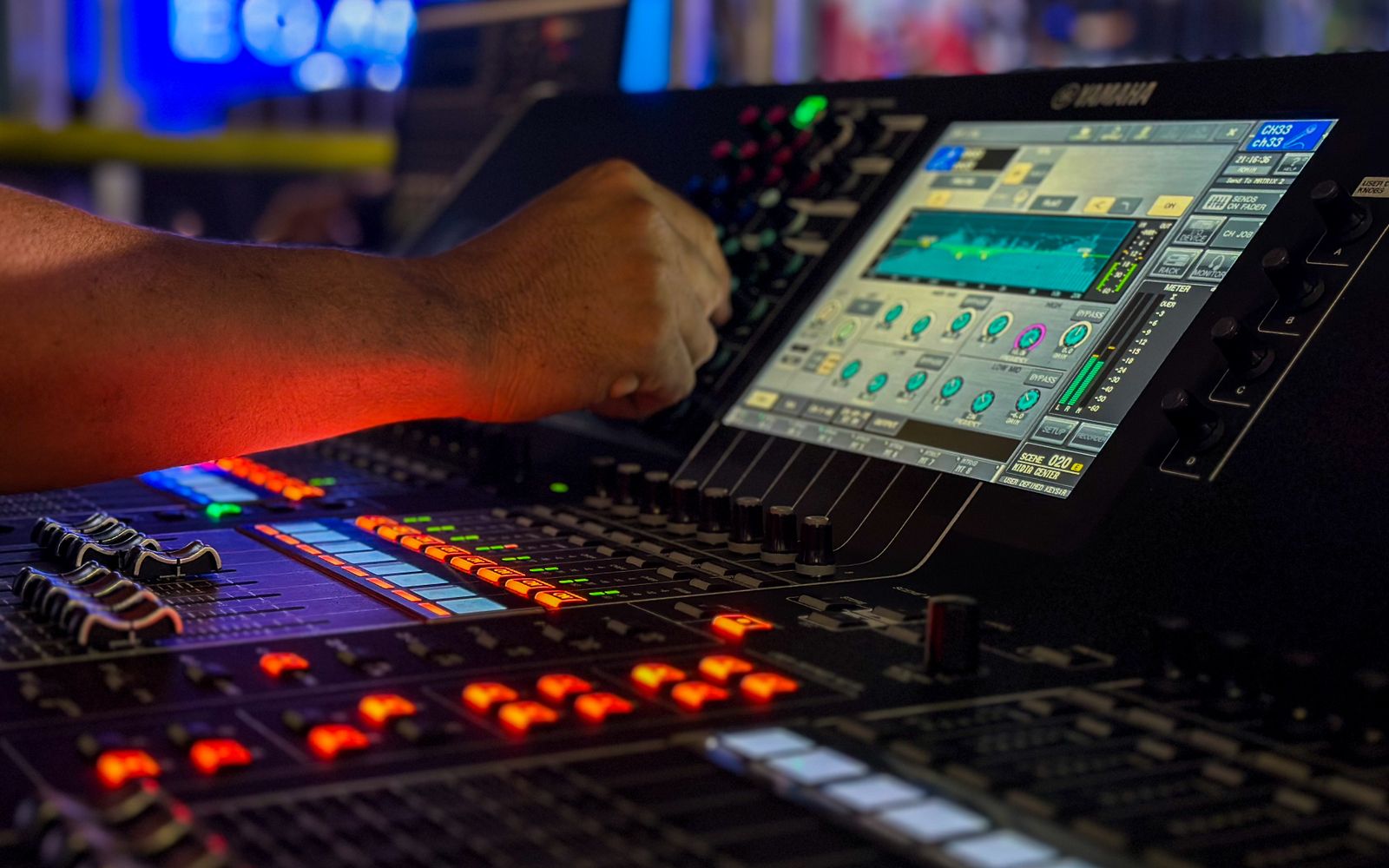
Hotel staff need fast, low-risk controls for everyday functions: select the event mode, choose a local source, adjust permitted levels and end the session. Event technicians need deeper access to routing, DSP status, projection, recording, lighting interfaces and diagnostics.
Combining both audiences on one crowded page makes simple events harder and hides critical information during complex ones.
Use role-appropriate interfaces with consistent language. Show the room combination, active source, microphone state and any fault that requires action. Confirm destructive changes such as joining rooms or recalling a new event mode.
Physical mute and level controls can remain valuable at a technician position because they provide immediate feedback during live speech.
Plan for conferencing and streaming selectively
Not every ballroom needs to behave like a giant meeting room. Define which event types require remote presenters, audience cameras, far-end questions, programme recording or a broadcast-quality stream.
A simple webinar, a hybrid leadership meeting and a multi-camera product launch have different staffing, latency, audio-mix and privacy requirements. The hotel should be clear about which capabilities are installed and which require production equipment.
For corporate sessions, reuse dependable principles from simple meeting-room design: clear join paths, readable content and intelligible two-way speech. Then add ballroom realities such as audience microphones, presenter confidence, stage cameras and show calling.
Avoid a single preset that claims to cover every hybrid event but has never been tested with the expected production team.
Coordinate lighting and staging without overreaching
AV control may recall lighting scenes, close shades or exchange status with building systems, but ownership must be explicit. The AV interface should not expose unsafe rigging, power or life-safety functions.
Agree which scenes hotel staff may recall, which controls remain with production specialists and what happens if an integration link fails. Emergency and fire systems must retain their required independent behaviour.
Plan stage power, floor loading, cable routes and sightlines with event operations and the venue designer. Projection and camera positions should not block exits or service paths. Temporary cables need protected routes.
These details are less visible than a screen specification, yet they determine whether the hotel can change from a banquet to a conference safely and on schedule.
Commission every mode with real event workflows
A combined-room test does not prove that each divided state works. Commission every supported partition combination and major event mode. Verify source routing, output isolation, microphone coverage, loudspeaker zoning, control permissions, lighting interfaces, recording feeds, fault messages and shutdown.
Test wall movement and inconsistent sensor states so recovery is known before a paying event exposes the problem.
Use scripts that hotel teams recognise: set a conference with lectern and confidence display, divide for parallel workshops, join for a banquet, accept a guest production feed and restore the venue afterward. Record results and approved configuration files.
The wider regional AV standards guide for China and Asia offers a framework for consistent commissioning evidence across sites and suppliers.
Design service around the event calendar
Ballroom support cannot be scheduled like routine office maintenance. The service team needs access to the event calendar, critical rehearsals and turnaround windows. Define pre-event checks for displays, projection, microphones, batteries, routing and control.
Decide when onsite standby is required and how hotel staff escalate a fault during a live session without explaining the complete system to a new help-desk agent.
Remote monitoring can flag offline devices, temperature, software drift or a failed signal path, but alerts need ownership and context. Sinoway's 2026 guide to AV management across China explains how inventories, pilot updates and local response turn portal data into an operated service.
For a hotel, the priority and response time should also reflect the next booked event.
Protect operations with documentation and spares
Keep as-built drawings, rack elevations, network settings, approved software versions, DSP and control backups, room-mode descriptions and test records together. Label ports and portable assets in the language used by hotel teams.
Document how to isolate a faulty salon, restore a known configuration and operate a reduced service when a noncritical component is unavailable.
Choose spares around consequence and replacement time. Microphone batteries, presentation adapters and common cables are daily consumables; selected endpoints, power supplies or control interfaces may justify strategic spares. Train staff to replace only items covered by a safe procedure.
Complex diagnosis and configuration restoration should remain with qualified support, supported by the same current records.
How should a hotel choose an AV integrator in China?
Ask prospective partners to explain the event operating model, every room combination and the evidence they will produce at commissioning. A capable hotel AV integrator in China should coordinate architectural, electrical, network, acoustic, RF and production requirements—not offer only a bill of materials.
Review local response coverage, configuration management, training and how software changes will be tested after handover.
For a Shanghai property or a regional hotel group, an experienced audiovisual company in Shanghai should also distinguish the repeatable standard from justified local adaptation. Sinoway's managed AV services for Shanghai and China describe how monitoring, maintenance and onsite response can continue after project completion.
The goal is a ballroom that staff can operate confidently and technicians can recover quickly when an event changes.
Frequently asked questions
What should a hotel specify first for a divisible ballroom AV system?
Start with the events, room combinations, stage positions, operator roles and turnaround times the hotel must support. Those workflows determine audio zones, video routes, controls, RF capacity and commissioning tests.
Should partition sensors automatically combine ballroom AV?
Sensors can provide useful status, but room changes should use confirmed, safe transitions. The design needs interlocks, operator feedback and a manual recovery path for inconsistent sensor states.
How many wireless microphones can a hotel ballroom use?
There is no universal number. Capacity depends on local spectrum, permitted bands, system type, channel spacing, antenna design and other wireless systems operating across the venue. Perform a current RF survey and coordinate the complete event inventory.
Does every ballroom need permanent streaming equipment?
No. Install the repeatable capabilities the hotel operates regularly, then provide tested inputs and outputs for specialist production when an event requires more cameras, recording or broadcast workflows.
How often should hotel ballroom AV be tested?
Perform routine health checks, test critical functions before important events and revalidate affected modes after configuration, firmware, network, partition or equipment changes. A full periodic test should include every supported room combination.