
Key takeaways
- Start with guest and staff journeys, then define the systems and interfaces that support them.
- Keep essential lighting, temperature and privacy functions usable during network or platform outages.
- Separate room-level control, GRMS, PMS and BMS responsibilities with explicit data and failure boundaries.
- Build and commission a representative room before repeating the design across the property.
What should a hotel guest-room control system do?
Guest-room control should let a traveller understand the room within seconds. Entry lighting, bedside scenes, blackout, temperature, television and Do Not Disturb should behave consistently without an explanation card.
Behind that simplicity, the hotel needs reliable status, service workflows, energy logic and support information. The design succeeds when guests can rest and staff can operate the property without thinking about the control platform.
For a new hotel or renovation in Shanghai, begin with an AV integrator in China for hospitality technology before finishes and services are fixed. Lighting circuits, curtain motors, fan-coil units, televisions, door interfaces, network outlets and service panels cross several design packages.
Early coordination prevents a polished room from depending on improvised gateways, hidden adapters or controls placed beyond easy reach.
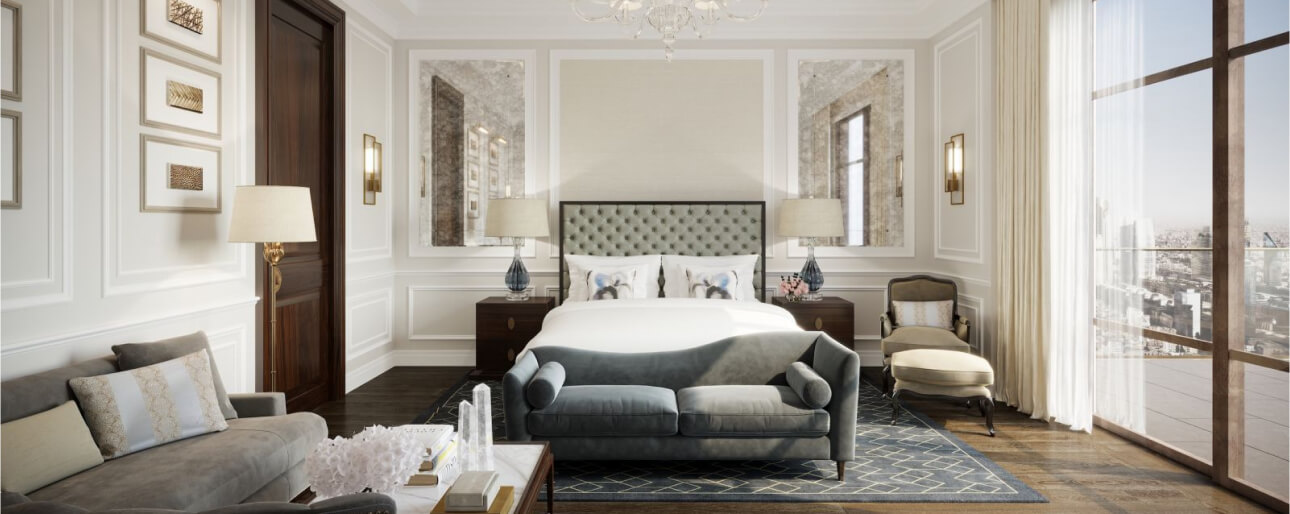
Start with guest and staff journeys
Map the room from arrival to departure. A useful journey includes pre-arrival preparation, first entry, daytime use, sleep, night-time movement, service requests, vacancy and checkout. For each moment, define what happens automatically, what the guest chooses and what staff can see.
Avoid features that are impressive in a demonstration but create uncertainty during a real stay.
Map staff journeys separately. Housekeeping needs accurate Make Up Room and Do Not Disturb status. Engineering needs actionable faults rather than a flood of sensor data. Front-office and energy teams may need occupancy or booking context, but they do not need unrestricted access to every room event.
Assign a purpose, owner and retention rule to each data point before connecting systems.
Keep essential controls local
A guest must still be able to switch lights, adjust temperature within approved limits and close window coverings if a cloud service, PMS link or property network is unavailable. Room-level logic should provide a known local state and recover gracefully after power or network interruption.
A hotel should not turn a temporary upstream fault into dozens of unusable rooms.
Use tactile controls for high-frequency actions such as bedside lights, master off, reading lights and blackout. A touch screen or mobile interface can expose richer scenes and hotel services, but it should not be the only path to basic comfort.
Labels, button location, night-time visibility and feedback matter as much as the number of functions available.
Define the PMS, BMS and GRMS boundaries
The property management system knows reservation and room-status information. The building management system supervises mechanical services and plant. The guest room management system coordinates room devices, scenes and operational status.
These roles can overlap, so document which platform owns each command, which system is authoritative and what happens when an interface becomes unavailable.
Use explicit events instead of vague promises of full integration. For example, a verified check-in state may permit a welcome scene and comfortable temperature range. Checkout may return the room to an energy-saving vacant state after an agreed delay.
A maintenance alarm should identify the room and affected function without exposing unnecessary guest behaviour. Test each event in both normal and failure conditions.
Design lighting scenes around real use
Useful scenes are easy to predict: Welcome, Relax, Work, Night and All Off may be enough for many rooms. Preserve direct control of task lights so a guest can refine a scene. Avoid a single master command that creates darkness before the person has reached the bed or door.
Night paths should provide low-level guidance without flooding the room with bright light.
Coordinate dimming method, minimum levels, driver compatibility and emergency lighting with the electrical and lighting teams. Mock up the exact lamps and control hardware because a specification can look compatible while dimming poorly in practice.
The scene names shown on screens and keypads should match the hotel's operating language and remain consistent across room types.
Treat shading as part of comfort and privacy
Sheer and blackout window coverings need clear, separate commands. Confirm motor direction, travel limits, obstruction behaviour, manual recovery and the effect of unusual window geometry. A scene can coordinate lights and shades, but guests should retain an obvious way to adjust each layer.
Never assume that an automated schedule matches every traveller's sleep or privacy preference.
Crestron's current hospitality guest-room overview describes coordinated control of lighting, shades, climate, audio, video, occupancy and PMS or BMS interfaces. That illustrates one active platform approach.
The hotel still needs to verify the exact regional products, software, gateways and support arrangement proposed for its project before procurement.
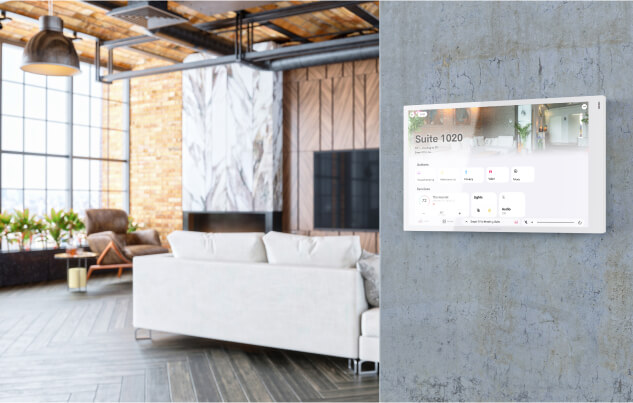
Coordinate climate control without confusing the guest
Temperature control should show a familiar setpoint and respond predictably. The GRMS may apply occupied, setback and vacant modes, while the BMS supervises plant and broader energy strategy. Define permitted ranges, fan choices, humidity handling and the delay before an unoccupied room changes state.
Sudden unexplained changes undermine trust even when the energy logic is technically correct.
Occupancy is not one simple signal. Door contacts, motion sensors, booking status and housekeeping activity can disagree. Use a documented sequence and conservative timing rather than turning equipment off after one moment without movement.
Test sleeping guests, long showers, late checkout, adjoining rooms and maintenance visits so energy decisions do not compromise comfort or service.
Plan television, audio and guest casting around privacy
The in-room television may provide broadcast channels, hotel information, streaming apps, casting or a welcome message. Define who owns the content platform, how the guest changes input and volume, and how the room returns to a clean state after checkout.
Personal accounts, pairing records and cast targets must not remain visible to the next guest.
Casting should make the destination unmistakable and isolate rooms from one another. Confirm how a guest disconnects, what happens when the television restarts and how support can diagnose a problem without seeing private content.
If a hotel offers Bluetooth audio or voice control, apply the same checkout reset, network separation and consent principles.
Connect service status to accountable workflows
Do Not Disturb and Make Up Room are not decorative buttons. Their state can affect doorbell behaviour, corridor indicators, housekeeping tasks and guest communications. Define which system owns the status, how conflicting requests are resolved and when the state resets.
Staff displays should be accurate without exposing room information beyond the people who need it.
Other requests such as laundry, room service or valet can be offered through a screen or app, but each needs an operational destination and response expectation. Do not add a digital button unless a team is prepared to receive, acknowledge and complete the request.
The guest experience is damaged when a beautiful interface sends a message into an unmonitored queue.
Design for accessibility and language needs
Controls should remain reachable, legible and understandable for guests with different mobility, vision and hearing needs. Provide sufficient contrast, tactile orientation and consistent placement. Do not rely on colour alone to show state.
Accessible rooms may need additional curtain, door, alarm or communication interfaces, and those functions should be included in the same commissioning discipline as standard rooms.
Hotel interfaces in China may support more than one language, but language selection should not hide core room functions behind several screens. Use short, familiar labels and recognisable status feedback. Physical controls can reduce language dependence when their layout remains consistent.
Test the interface with people who were not involved in the project and ask them to complete common tasks without coaching.
Give public areas a separate operating model
Lobbies, restaurants, lounges, corridors, spas and outdoor areas do not behave like guest rooms. They need zone-based background music, paging priorities, digital content, scheduled scenes and event overrides.
A public-area system may share network, monitoring or control standards with the rest of the hotel, but operators, fault impact and opening-hour workflows are different.
Q-SYS currently describes its hospitality audio, video and control platform for hotels and other multi-zone venues, including central monitoring and management. A platform can reduce unnecessary silos, but every zone still needs capacity, routing, priority, control and recovery rules.
The hotel ballroom AV guide for China covers the more production-led requirements of divisible event spaces.
Secure the room and property networks
Separate guest internet access from operational control and building services. Define VLANs, addressing, firewall paths, certificates, time services, account roles and approved remote-support methods with the hotel's IT and security teams. Record every gateway between GRMS, PMS, BMS, television, casting and service platforms.
Convenience should not create an undocumented route across trust boundaries.
Decide who applies firmware and software updates, how changes are tested and which versions are approved. A room mock-up or pilot floor can provide a safer update group before a property-wide rollout.
Sinoway's office AV management guide for China explains the same operational principles of inventory, baselines, monitoring and controlled change across many connected rooms.
Prove the design in a representative room
Build a full mock-up using the real bed, furniture, controls, lighting loads, curtain tracks, fan-coil interface, television and network services. Include the corridor panel and staff workflow.
Test entry, sleep, night movement, service requests, vacancy and checkout with people from hotel operations, housekeeping, engineering, IT, design and accessibility teams.
Record approved settings, photographs, labels, software, wiring and acceptance results. When room types differ, identify which details are standard and which require separate validation. A signed mock-up becomes the reference for hundreds of installation decisions.
Without it, small substitutions can accumulate until rooms with the same number behave differently.
Commission the complete property lifecycle
Commission every room type and sample repeated rooms across floors and phases. Verify each input, output, scene, service status, interface and alarm. Then test power loss, network loss, failed gateways, incorrect sensor states and recovery after updates.
The acceptance record should show the tested result, not only that equipment was installed.
Plan spare controllers, keypads, sensors, power supplies and interface modules around replacement lead times. Preserve source files, credentials, licences and approved configuration backups. Connect meaningful faults to an accountable service desk and define local response.
The managed AV services guide for Shanghai and China explains how monitoring becomes valuable only when ownership and recovery are attached to it.
How should a hotel choose an integrator in China?
Ask prospective partners to present the guest journey, systems boundaries, room mock-up plan, cybersecurity responsibilities and commissioning evidence. A capable hospitality AV integrator in China should coordinate interior design, electrical, lighting, HVAC, IT, hotel operations and specialist vendors.
The proposal should explain how daily room operation survives failures and how the hotel will support the system after handover.
For a Shanghai property, an experienced audiovisual company in Shanghai should also validate current regional product availability, provide local engineering and communicate clearly across international standards and local construction teams.
Compare evidence rather than brand lists: interface schedules, test scripts, sample room records, training, spares and service ownership. Sinoway's regional AV standards guide for China and Asia shows how those records support consistency across multiple sites.
Frequently asked questions
What is a hotel guest room management system?
A guest room management system coordinates room controls and operational states such as lighting, shading, temperature, occupancy and service status. It may exchange selected information with property and building management systems.
Should hotel room controls depend on the cloud?
Essential guest functions should continue locally during cloud or property-network outages. Cloud services may add monitoring or management, but the room needs a documented local fallback and recovery state.
How should a hotel protect guest privacy when offering casting?
Isolate rooms, make the destination clear, provide an obvious disconnect path and remove pairing records, accounts and personalised data at checkout. Support teams should diagnose platform health without viewing private content.
Why build a hotel room mock-up?
A complete mock-up proves lighting, controls, curtains, climate, television, interfaces, labels and staff workflows before repetition. It also creates an approved reference for installation and commissioning.
Can guest rooms and public areas use one control platform?
They may share appropriate infrastructure and monitoring, but their users, workflows, risks and recovery needs differ. Design separate operating models even when the underlying platform is common.